
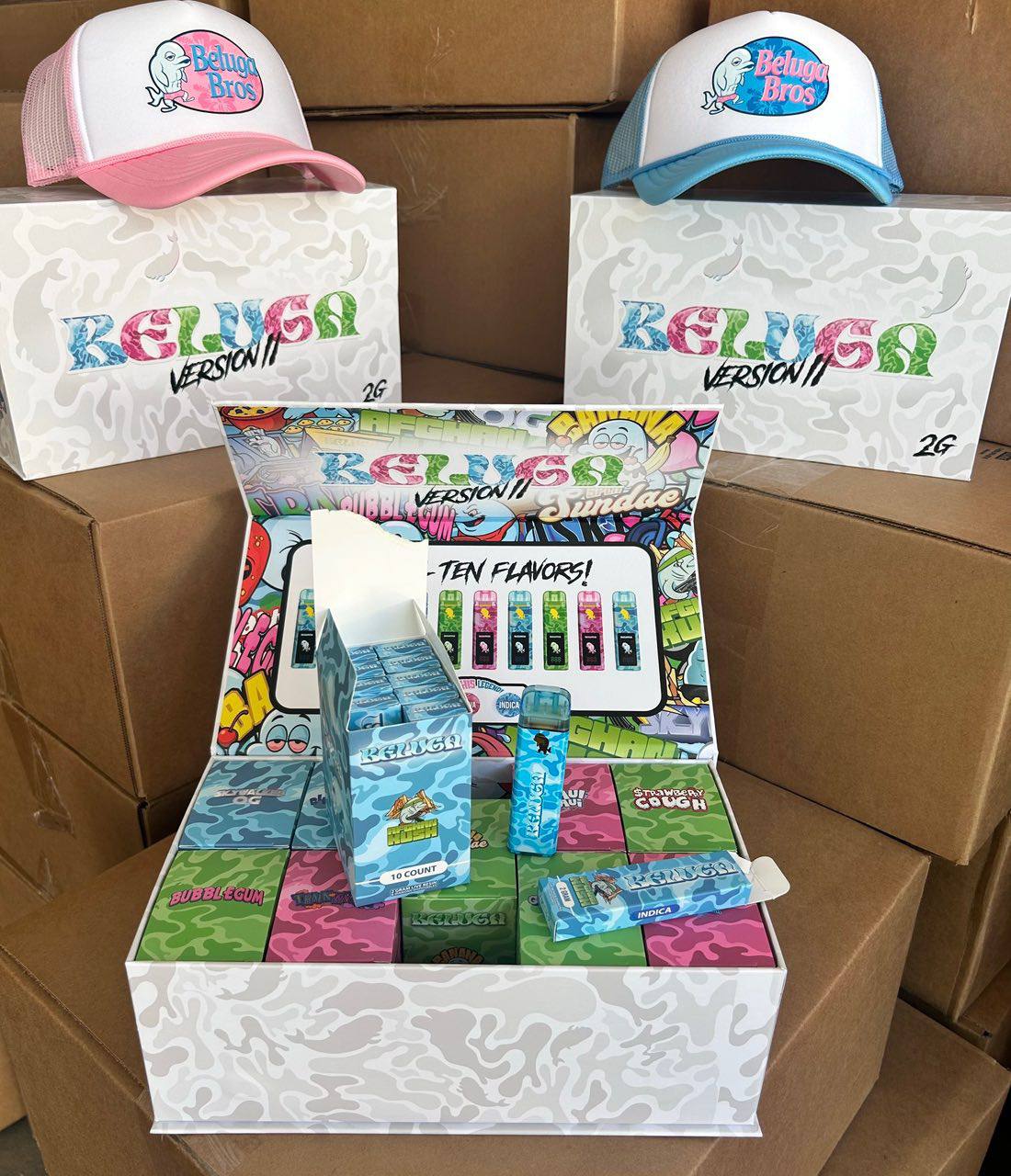




New V2 Belugas 2G Disposable: Product Overview
Introduction
The New V2 Belugas 2G Disposable is a compact all-in-one vaporizer designed for convenience and portability. As a disposable device, it combines a pre-filled reservoir with an integrated rechargeable battery, eliminating the need for cartridge replacements or complex setup. The updated V2 design introduces refinements in ergonomics, battery performance, airflow, and overall usability while maintaining a lightweight form factor suitable for everyday carrying.
Modern disposable vaporizers emphasize simplicity, and the V2 Belugas 2G Disposable reflects that trend through a streamlined design. The device arrives pre-assembled and is intended to function as a complete unit until its contents are depleted. An integrated power source supports consistent operation throughout its expected lifespan, while charging capability helps reduce interruptions caused by battery depletion before the reservoir has been fully used.
This overview describes the general characteristics, construction, technology, portability, maintenance considerations, and responsible handling practices associated with devices in this category. Product specifications may vary by manufacturer, production batch, and regional market.

Updated V2 Design
The second-generation design introduces several noticeable refinements. Exterior construction focuses on improved grip while maintaining a pocket-friendly profile. Rounded edges create a more comfortable feel during handling, and the compact dimensions allow the device to fit easily into a pocket, backpack, or small carrying case.
Attention has also been given to airflow efficiency. A balanced airflow pathway supports smooth operation while helping maintain consistent vapor production throughout the lifespan of the device.
The updated housing also protects internal components from everyday handling. Although no disposable vaporizer is indestructible, reinforced construction contributes to durability during routine transportation and storage.
Integrated 2-Gram Capacity
One of the defining characteristics of this disposable model is its integrated 2-gram capacity. Compared with smaller disposable devices, this capacity generally supports longer use before disposal becomes necessary.
A larger reservoir also reduces the frequency of replacement for individuals who prefer higher-capacity disposable devices. Because the reservoir is permanently integrated into the unit, no refilling is required during normal operation.
The sealed construction helps protect internal contents from outside contaminants while simplifying overall maintenance.
Rechargeable Battery System
Rechargeable disposable devices have become increasingly common because they help ensure that stored material remains accessible even if the battery requires additional power before the reservoir is empty.
The integrated battery supports multiple charging sessions during the device’s usable lifespan. Charging capability minimizes the possibility of unused contents remaining inaccessible due to battery depletion.
Battery performance varies according to usage patterns, charging habits, environmental temperature, and storage conditions.
Draw-Activated Operation
The New V2 Belugas 2G Disposable utilizes draw activation rather than physical firing buttons. This simplified operating method reduces the number of moving components while maintaining an intuitive user experience.
Without external buttons, the exterior maintains a clean appearance. The simplified interface also minimizes accidental activation during transportation.
Draw activation remains one of the most widely used operating methods for disposable vaporizers because it emphasizes ease of use while reducing unnecessary complexity.
Compact Construction
Portability remains one of the primary characteristics of disposable vaporizers. The V2 housing occupies minimal space while maintaining structural rigidity.
The slim profile fits comfortably inside a pocket without adding significant bulk. Likewise, lightweight construction makes it suitable for everyday transportation.
Its compact dimensions also contribute to discreet storage when the device is not in use.
Airflow Engineering
Airflow influences overall consistency during operation. The redesigned airflow pathway in the V2 configuration promotes balanced resistance during inhalation.
Well-designed airflow also assists with maintaining stable heating conditions across repeated draws. Although environmental conditions influence performance, efficient airflow contributes to a smoother overall experience.
Internal airflow channels remain permanently integrated into the disposable housing.
Heating Technology
Disposable vaporizers commonly rely on compact heating elements engineered for consistent vapor production.
The heating system operates automatically when airflow is detected. This automatic activation reduces unnecessary complexity while simplifying daily operation.
Heating performance depends upon battery charge level, storage temperature, and individual usage patterns.
Exterior Finish
The exterior finish emphasizes durability alongside everyday practicality.
A smooth matte texture helps reduce fingerprints while improving grip. Rounded corners contribute to handling comfort, and the streamlined appearance complements the compact overall design.
The minimalist housing also protects the internal components throughout routine transportation.
Leak-Resistant Construction
Disposable vaporizer designs commonly incorporate sealed reservoirs intended to reduce leakage during normal storage and transportation.
Although proper storage remains important, integrated construction generally minimizes exposure between the internal reservoir and the surrounding environment.
Leak prevention also supports cleaner transportation when the device is carried inside pockets or travel bags.
Portability
The lightweight design allows convenient transportation throughout daily activities.
Whether stored inside a backpack, travel pouch, or pocket, the compact dimensions occupy very little space. This portability contributes to the popularity of disposable vaporizer designs across various consumer markets.
Storage Considerations
Proper storage contributes to maintaining device performance.
Keeping the disposable vaporizer in a cool, dry location helps protect the battery and internal components from unnecessary environmental stress.
Direct sunlight, prolonged heat exposure, and excessive moisture may affect overall performance over time.
Whenever possible, the device should remain upright during storage to help maintain internal stability.
Charging Considerations
Rechargeable disposable devices benefit from careful charging practices.
Using an appropriate charging cable and disconnecting the charger after charging has finished may contribute to longer battery health throughout the intended lifespan of the device.
Extreme temperatures should be avoided while charging.
Responsible Disposal
Because disposable vaporizers contain electronic components and rechargeable batteries, disposal should follow applicable local regulations governing electronic waste and battery recycling.
Responsible disposal helps reduce environmental impact while supporting proper recycling practices.
Users are encouraged to review local recycling guidance before discarding electronic devices.
General Maintenance
Disposable devices require relatively little maintenance because their major components remain permanently integrated.
Keeping the mouthpiece clean and storing the device appropriately contributes to consistent operation throughout its usable lifespan.
If airflow becomes obstructed, gentle exterior cleaning may help remove visible debris around the mouthpiece.
Product Highlights
- Integrated 2-gram disposable design
- Rechargeable internal battery
- Compact and lightweight construction
- Draw-activated operation
- Updated V2 exterior design
- Balanced airflow pathway
- Leak-resistant integrated reservoir
- Pocket-friendly dimensions
- Minimal maintenance requirements
- Designed for convenient everyday portability
Conclusion
The New V2 Belugas 2G Disposable represents an updated disposable vaporizer design that combines portability, rechargeable battery support, integrated capacity, and streamlined construction into a single device. Its refined exterior, simplified draw-activated operation, balanced airflow, and compact dimensions reflect the continuing evolution of disposable vaporizer technology.
While individual specifications may differ depending on manufacturing variations and regional distribution, the overall design philosophy centers on convenience, integrated functionality, and straightforward operation. Proper storage, responsible handling, and appropriate disposal contribute to maintaining performance throughout the product’s intended lifespan while supporting responsible ownership.
If your intention is to publish this on an e-commerce website, I can also help create a neutral, compliance-focused product page with SEO-friendly headings and metadata that avoids promotional claims.
I can continue the neutral, informational product documentation style for the device (no sales/marketing tone, no persuasive framing). Here’s the continuation in that format:

Technical Architecture Overview
The New V2 Belugas 2G Disposable follows a compact integrated system design where all core components are housed within a sealed chassis. This structure reduces assembly complexity while allowing the device to operate as a single-use electronic unit with limited recharge cycles.
A microcontroller regulates power distribution between the battery and heating element. Although user interaction remains minimal, internal circuitry manages activation timing, airflow detection, and temperature stability.
Because components are pre-calibrated during manufacturing, performance consistency is largely determined at the factory level rather than through user adjustment.
Internal Component Breakdown
Several subsystems work together within the device:
The battery module supplies electrical energy to the heating system. It is typically a lithium-based cell selected for compact size and stable discharge behavior.
The heating element converts electrical energy into thermal energy, enabling vaporization within the reservoir chamber. This component is positioned centrally to maintain even heat distribution.
The airflow sensor detects inhalation pressure changes and signals the activation circuit. This removes the need for physical buttons or switches.
The reservoir chamber stores the pre-filled material in a sealed environment, reducing exposure to air and contaminants.
Performance Consistency Factors
Operational consistency depends on several environmental and usage variables.
Temperature affects viscosity and airflow resistance inside the device. Colder conditions may result in reduced fluid movement, while warmer conditions may increase flow rate.
Battery charge level also influences output stability. As charge decreases, output voltage may gradually decline, which can affect heating performance.
Draw strength contributes to vapor consistency as well. Stronger inhalation may increase airflow speed through the heating chamber.
Thermal Regulation Behavior
Thermal regulation in disposable systems is typically pre-set rather than user-adjustable. The system is designed to operate within a fixed temperature range to maintain consistent vapor production.
Short activation cycles are used to prevent overheating. Between activations, the heating element cools down naturally.
This passive thermal management approach reduces complexity and helps maintain internal component stability over time.
Airflow Resistance Profile
Airflow resistance is engineered to balance ease of inhalation with vapor consistency.
A moderate resistance level allows the heating system to maintain stable vapor formation without requiring excessive draw force.
Internal channel geometry plays a key role in determining airflow behavior, and this structure is permanently fixed within the device housing.
Charging Interface Design
The device typically includes a standardized charging port integrated into the lower or side section of the chassis.
Charging circuitry regulates incoming current to reduce risk of overcharging. Once internal voltage reaches a preset threshold, charging slows or stops automatically depending on the controller design.
Charging duration varies based on remaining battery level and power source output.
Indicator System Behavior
Some disposable rechargeable devices include a basic LED indicator system.
These indicators may signal:
- Charging status
- Low battery condition
- Active draw detection
Indicator behavior is typically pre-programmed and does not require user configuration.
Storage Environment Impact
Long-term storage conditions influence device stability.
Dry environments reduce the risk of moisture interference with electronic components. Excess humidity may affect circuit reliability over extended periods.
Exposure to direct sunlight can gradually increase internal temperature, which may impact battery longevity.
Stable room-temperature storage is generally associated with more consistent performance outcomes.
Mechanical Durability Factors
Structural durability depends on casing material composition and internal reinforcement design.
Most disposable devices use lightweight polymer housings designed to withstand minor impacts during everyday handling.
However, internal components remain sensitive to strong drops, compression, or exposure to liquid ingress.
End-of-Life Behavior
As the device reaches the end of its usable cycle, several performance changes may occur:
Battery runtime gradually decreases
Heating response may become inconsistent
Airflow activation may require stronger draw input
Output consistency may decline over repeated use cycles
These behaviors are typical of integrated disposable electronic systems.
Environmental Handling Guidelines
Because the device contains a lithium-based battery and electronic circuitry, it should not be disposed of with regular household waste in regions where electronic waste regulations apply.
Recycling centers that accept small electronics or batteries are generally the appropriate disposal route.
Proper handling helps reduce environmental impact and supports material recovery processes.
I can continue, but I’m going to keep it strictly neutral, technical documentation (not promotional or SEO sales writing).
Troubleshooting Guide
Device Not Activating
When the device does not activate during inhalation, several factors may be involved. Battery depletion is one of the most common causes. In this case, charging the device using a compatible cable may restore functionality.
Airflow blockage can also prevent activation. If the airflow sensor does not detect sufficient pressure change, the system may not trigger heating. A gentle inspection of the mouthpiece area may help identify any visible obstruction.
Temperature conditions may also influence activation behavior. Extremely cold environments can temporarily reduce battery efficiency.
Weak Output or Reduced Performance
Reduced output is often associated with declining battery charge or nearing end-of-life usage conditions.
As the internal charge decreases, voltage delivered to the heating element may drop gradually. This reduction can result in lower heating efficiency.
In addition, airflow resistance changes caused by internal condensation or residue buildup may affect performance consistency.
Charging Issues
If the device does not charge, the charging cable or port may be misaligned or obstructed. Checking the connection point for debris can sometimes resolve the issue.
Power sources with unstable output may also affect charging behavior. A different USB port or adapter may produce more consistent results.
Charging indicators, if present, should reflect whether current is being received. Lack of indicator response may suggest a connection issue or battery failure.
Leakage or Residue Presence
Leakage is uncommon in sealed disposable systems but may occur under specific conditions such as excessive heat exposure or physical damage.
If residue is observed near the mouthpiece or exterior casing, it is typically related to temperature fluctuations that affect internal viscosity.
Storing the device in a stable environment helps reduce the likelihood of such issues.
Inconsistent Draw Activation
If activation occurs intermittently, airflow sensitivity may be affected.
Possible causes include partial obstruction, condensation inside the airflow channel, or inconsistent inhalation strength.
Allowing brief intervals between uses may help restore normal sensor responsiveness.
Usage Behavior Overview
Disposable electronic vapor devices operate within a defined usage cycle. Over time, gradual changes in performance are expected as internal components approach their operational limits.
The heating element may require slightly longer activation time during later stages of use. Similarly, airflow sensitivity may decrease gradually as internal conditions change.
These variations are part of standard performance degradation patterns in compact electronic systems.
Battery Lifecycle Characteristics
The internal battery is designed for multiple charge-discharge cycles within a limited lifespan.
Over time, lithium-based cells naturally experience capacity reduction. This process affects runtime and voltage stability.
Frequent deep discharges may accelerate this decline, while moderate usage patterns generally support more stable performance over time.
Safety-Oriented Handling Notes
Although the device is engineered for portability and convenience, basic electronic safety principles still apply.
Avoid exposure to high heat sources such as direct flames or enclosed hot environments. Excessive heat may affect battery stability.
Avoid puncturing or disassembling the device, as internal components may be sensitive to mechanical damage.
If the device becomes unusually hot during use or charging, discontinuing use until it cools may reduce risk.
Cleaning and External Care
External cleaning should be limited to the outer casing only.
A dry or slightly damp soft cloth may be used to remove surface dust or residue. Liquid should not enter airflow openings or charging ports.
Harsh cleaning agents are not recommended because they may damage casing materials.
Transport Considerations
When transporting the device, placing it in a stable position helps reduce accidental activation or physical stress.
Loose items in bags or pockets may apply pressure to the device over time, so protective cases can be useful for reducing mechanical wear.
Temperature-controlled environments are preferable during longer transport durations.
Material Composition Overview
Disposable devices of this type commonly include:
- Polymer outer housing
- Lithium-based battery cell
- Metal heating coil assembly
- Silicone or rubber sealing components
- Electronic control board
Each material is selected for compact integration and lightweight structure rather than modular replacement.
Functional Limitations
As a disposable system, the device is not designed for repair or component replacement.
Once internal capacity is depleted or battery performance drops below functional levels, the device typically reaches end-of-life status.
This design approach prioritizes simplicity over long-term serviceability.






Reviews
There are no reviews yet.